
Water Extraction and Drying in Austell, GA
Carpet that squelches, a puddle across a hallway, a laundry room floor that stays dark: this is the page for water that needs to come out of a house in Austell, Mableton or Clarkdale. Call (678) 737-4866 and describe the room, the flooring and how long the water has sat.
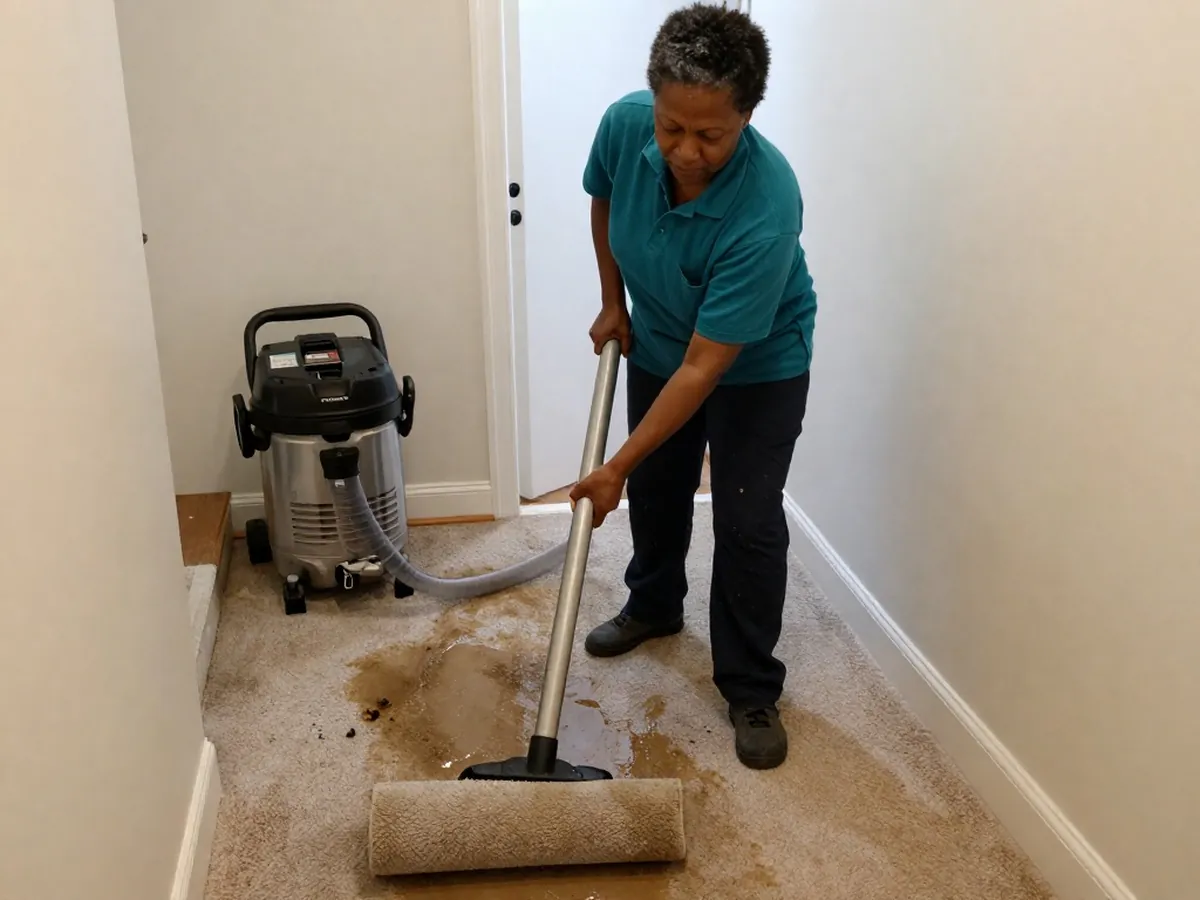
Soaked carpet and standing water in Austell homes
- Carpet that squelches under your feet
- A skin of water on tile, vinyl or hardwood that keeps coming back
- Baseboards darkening or swelling along one wall
- A damp, musty smell in a room that smelled normal last week
- Furniture legs standing in wet carpet or a stained pad
Moves that backfire
Four habits that turn a wet floor into a wet house
- 01
Wading to the panel. Water and live power make the dangerous pair. The CDC's rule covers switching power on or off and running electric tools alike: not while standing in water. A panel across a wet floor is work for an electrician.
- 02
Waiting for the weather to do the drying. Past the 24-hour mark the EPA puts mold on the table for wet materials, and a dry-feeling surface can hide a soaked pad beneath it and a wet wall behind it.
- 03
Moving the soaked rug before photographing it. The picture of where the water reached is worth more than the rug.
- 04
Cleaning up drain or creek water with bare hands. The CDC calls for rubber boots and plastic gloves, soap and clean water afterward, and throwing out what cannot be disinfected.
Where it tends to start
- A washer, dishwasher or toilet that overflowed before anyone noticed
- A slow supply-line leak behind a wall or under a cabinet
- Hard rain forced in under a door, through a window well or along the slab edge
- A tank-style water heater that rusted through and let go onto the floor
- An air handler drain or condensate line that backed up
Back away and get help if
- Outlets, cords or the breaker panel in or beside the water: do not wade in and do not touch a switch. Phone 911 or the electric company from a dry room.
- If a gas appliance sits in the water or gas can be smelled, leave the building, then use a phone from the yard to reach the gas company or 911.
- Flood or backup water from a drain, toilet or creek may carry sewage. Keep your skin clear of it; children and pets belong in another room.
- A ceiling bulging or dripping over the wet floor: nobody stands under it, and if it begins to drop, 911 gets the call.
How a job tends to run
From the first photo to a dry floor
- Before anything moves
Photograph the water line, the source and the wet furniture, and note when it started if you know.
- Power and source
The supply is shut off and the electricity near the water is checked; the CDC says an electrician checks the system before power returns.
- Water out
A wand or pump pulls the standing water, and carpet, pad or baseboard may come up with it, depending on what the water touched.
- Drying
Fans and dehumidifiers run while a moisture meter maps what is still wet; the EPA says drying a flooded house usually takes several days to weeks.
- The last reading
The EPA gives 15 percent or less as the moisture-content target for materials ready for refinishing.
Questions for the contractor
Five questions for the first visit
- Which rooms do you expect to open up, and what will the first visit settle?
- How will wet and dry readings be recorded and shared with me?
- Where will the fans and dehumidifiers sit, and who checks them while they run?
- What comes out on the spot, and what waits for a second look?
- Who deals with the electric check and the water source if either is still open?
Looks from dry ground
These are looks and sniffs from dry ground. Anything calling for a ladder, a tool or a step onto a wet floor belongs to the contractor.
- Find the source first. A hose, a drain line, a window well: stop the supply there, or at the main, before anything else.
- Photograph the floor, the wet walls and the source before anything is moved, and add a short video walk-through.
- Hold a dry paper towel to the baseboard and the lowest strip of drywall. Where it comes away damp, run painter's tape along the edge and check later to see whether the damp has moved past it.
- If the wet room is upstairs, glance at the ceiling below for a new stain or a bulge, and stay out from under one.
What changes the size of the job
Why one wet floor takes longer to dry than the next
- How much surface is wet and how far it spread.
- One room with a clear edge is a smaller job than water that traveled under a wall into the next room.
- What the floor is made of.
- Carpet over pad, laminate and tile behave differently when wet, so the materials set the plan.
- Where the water came from.
- The CDC treats water from drains and floods as possibly carrying sewage, and that changes what can be saved.
- How easy the room is to reach.
- Stairs, tight closets and finished basements all change the setup.
Local lines to know
- Austell Public Works takes water and sewer emergencies at 404-387-7898; its office number, (770) 944-4325, answers on weekdays between 8:00 a.m. and 5:00 p.m. A break in the street main is the city's repair, not a restoration crew's.
- Mableton sits on Cobb Water, whose dispatch line, 770-419-6201, is meant only for sewer backups and water lines gushing or leaking badly. Customer service at 770-419-6200 handles everything else.
- In Clarkdale, the water bill names the utility. Cobb Water says it supplies unincorporated Cobb County, while Austell's water service area is bounded by Noses Creek on the west and Buttermilk Creek on the east.
Straight answers
How urgent is standing water, from 1 to 10?
Eight to ten when water is near outlets, cords or the panel, came up from a drain, or sits under a ceiling that bulges: leave and use 911 or the utility. Four to seven when the carpet is soaked and the water is still spreading. One to three for a dried spill with no smell, where the checks above are enough.
Can I use a shop vacuum on a wet floor?
Not while standing in water near live power. For the CDC, an electric tool or appliance has no place in standing water, and wet-dry vacuums and pumps come up only after the power is confirmed safe. Wet outlets mean an electrician comes first.
How soon can mold start growing?
A day is the EPA's mark: building materials and furnishings that stay wet longer than that can grow mold. Its short guide asks that water-damaged areas and items be dry within 24 to 48 hours. A flooded house, the same agency adds, usually takes several days to weeks to dry out fully.
Does the air conditioner help dry things out?
The CDC lists fans, air conditioners and dehumidifiers for drying, with fans blowing outward. The EPA draws a line at an HVAC system the water reached: most cannot dry a flooded home alone, and it advises against using one that was affected.
Is a Mableton or Clarkdale address included?
Yes. Mableton's page and Clarkdale's page cover the utilities and creeks in each town. Call (678) 737-4866 and give the street; the contractor on the line will say whether that address is on its route.
Keep the street address, the wet room and a few phone photos close by. Then call (678) 737-4866 and describe where the water came from and what it touched. Tenants, tell the owner or manager as well.
Call (678) 737-4866A word on paperwork
Who may do what, and when the city wants paperwork
Austell, Mableton and unincorporated Cobb County each publish their own rules for repair work. The paperwork page sets out what each office's page says, and what it leaves unsaid.