
Burst Pipe Water Damage in Austell, GA
A hiss behind drywall, a stain that spreads on a dry day, a cabinet floor that never quite dries: pipe failures in Austell, Mableton and Clarkdale can run unseen inside walls for a long while. Call (678) 737-4866 and describe the sound, the stain and where the water seems to come from.
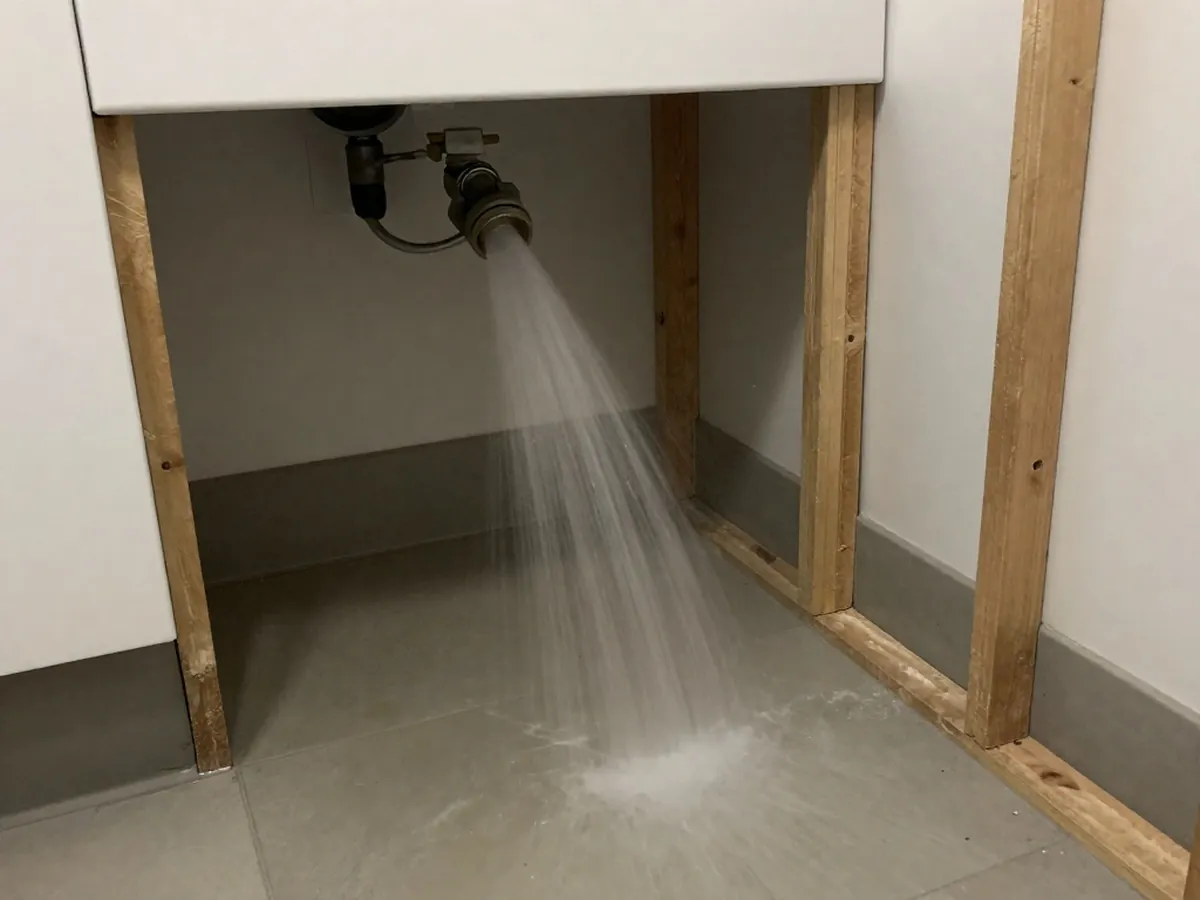
Spraying, dripping or silent pipe leaks in Austell
- A hissing or dripping sound inside a wall or ceiling
- A stain that grows on drywall with no rain outside
- Low pressure or no water at several taps
- A cabinet floor under a sink that never dries
- Paint bubbling or baseboards lifting along a plumbing wall
Moves that backfire
Habits that turn a pipe leak into a ceiling collapse
- 01
Reaching for the panel with wet shoes. The CDC is blunt about electric tools and appliances in standing water, and a spraying pipe wets more than the floor.
- 02
Poking the bulge in the ceiling below. The Red Cross says striking the middle of a wet, sagging ceiling can bring the whole thing down.
- 03
Leaving the main open while hunting for the leak. Cobb Water's advice for a large flow is to shut the whole house off.
- 04
Skipping the pictures. Georgia's insurance commissioner suggests photos or video before temporary repairs, plus every receipt.
Where it tends to start
- A supply line that froze overnight and split
- A joint or fitting that let go under pressure
- A braided washer hose that burst at the connection
- Corrosion in an older pipe inside an older house
- A screw or nail driven into a line during remodeling
Back away and get help if
- A pipe spraying toward a light fixture, outlet or the breaker panel: touch no switches, leave the room, and use 911 or the electric company from a dry spot.
- A gas appliance in the flooded spot, or a gas odor anywhere: exit the house before doing anything else, then contact the gas utility or 911 from the sidewalk.
- Very hot water or steam from a line: stand clear, since scalding is the risk, and leave the room.
- The ceiling under the leak is bulging or sagging: nobody stays beneath it, and 911 is the number if it starts to come down.
How a job tends to run
From the hiss to the opened wall
- The first minutes
Shut the water off at the main or the nearest valve, and keep clear of anything electrical the water reaches.
- Recording
Photographs of the leak, the wet surfaces and any temporary patch, taken before repairs, with receipts kept.
- Finding the line
A plumber traces the split or the failed fitting, and the water damage contractor takes up the wet material.
- Drying
Fans and dehumidifiers run once wet drywall, insulation or flooring has been dealt with; the EPA's flood cleanup page puts house drying at several days to weeks.
- Closing up
The wall or ceiling is rebuilt last, after the line itself is repaired.
Questions for the contractor
Five questions when a pipe has already let go
- Is the supply confirmed off, and who checks the line before it is turned back on?
- Who handles the wet materials, and who handles the pipe itself?
- Which walls or ceilings need to be opened to reach wet insulation?
- How will the readings show that the wall behind the stain is dry?
- Which photos and notes help most if there is an insurance claim?
Looks from dry ground
These are looks and sniffs from dry ground. Anything calling for a ladder, a tool or a step onto a wet floor belongs to the contractor.
- Find the main shutoff and learn how it turns before you need it. Cobb Water's advice for water running hard is to shut off the whole house.
- Look under each sink with a flashlight and hold a clean, dry paper towel against the pipes and the cabinet floor; a towel that comes away damp points to a slow leak.
- Listen at the wall with the house quiet. A steady hiss while every tap is off is worth reporting.
- Photograph any stain, then circle its edge in pencil and note the date so you can see whether it grows.
What changes the size of the job
Why two pipe leaks of the same size dry out so differently
- How long the pipe ran.
- A line stopped early wets one floor; a line that ran for days wets a wall cavity, a ceiling and the insulation above it.
- Where the wall opens.
- Behind a tile shower, under cabinets or above a finished ceiling, reaching the wet material takes more effort.
- What the water touched.
- Insulation, drywall and flooring each hold water differently.
- Whether the pipe repair is its own scope.
- A plumber's work on the line is one job; drying and removing wet material is another.
Local lines to know
- The whole-house shutoff is the first move Cobb Water names when a lot of water is running. Its freezing-pipes notice also advises dripping faucets in a cold snap.
- At the Atlanta Hartsfield station, NOAA's 1991-2020 normals count about 36 days a year with lows of 32 or colder, so a split line in a garage or crawl space is an ordinary winter story here.
- Austell's water page says the city installs and maintains water and wastewater lines along major streets, so a main break in the street is a call to 404-387-7898, the Public Works emergency line.
Straight answers
How urgent is a burst pipe? Rate it 1 to 10.
Nine or ten if it sprays near electricity, a gas appliance or under a bulging ceiling: leave and use 911 or the utility. Seven or eight for a pipe that is still running and cannot be shut off. Four to six once the water is off and walls are wet. One to three for a drip under a sink with a towel beneath it.
Where is the main shutoff, and how do I use it?
The location varies by house, and nothing consulted for this site says where yours sits. Cobb Water's advice is to learn how to shut your water off and, if a lot is running, to close the whole house down. Find the valve on a dry day and label it.
Is a dripping faucet worth it in a cold snap?
Ahead of a freeze, Cobb Water suggests letting faucets drip and knowing where to shut your water off. NOAA's Hartsfield normals list about 36 days with lows of 32 or colder, so cold nights come with a normal winter here.
What do leak sensors and shut-off valves do?
An EPA WaterSense guide describes battery sensors that spot water near washers and heaters, and automatic shut-off valves, often installed by a plumber at the main, that can close the supply when a sensor trips. They limit a leak; they do not repair one.
Does a Mableton or Clarkdale pipe count?
Both towns are on this site: see Mableton's page and Clarkdale's page. Call (678) 737-4866, name the town the pipe is in and give the street.
Keep the street address, the wet room and a few phone photos close by. Then call (678) 737-4866 and describe where the water came from and what it touched. Tenants, tell the owner or manager as well.
Call (678) 737-4866A word on paperwork
Plumbing work and the city office
Replacing or altering plumbing is the kind of work some city offices ask about. The paperwork page shows what Austell's and Mableton's own pages say about plumbing.